
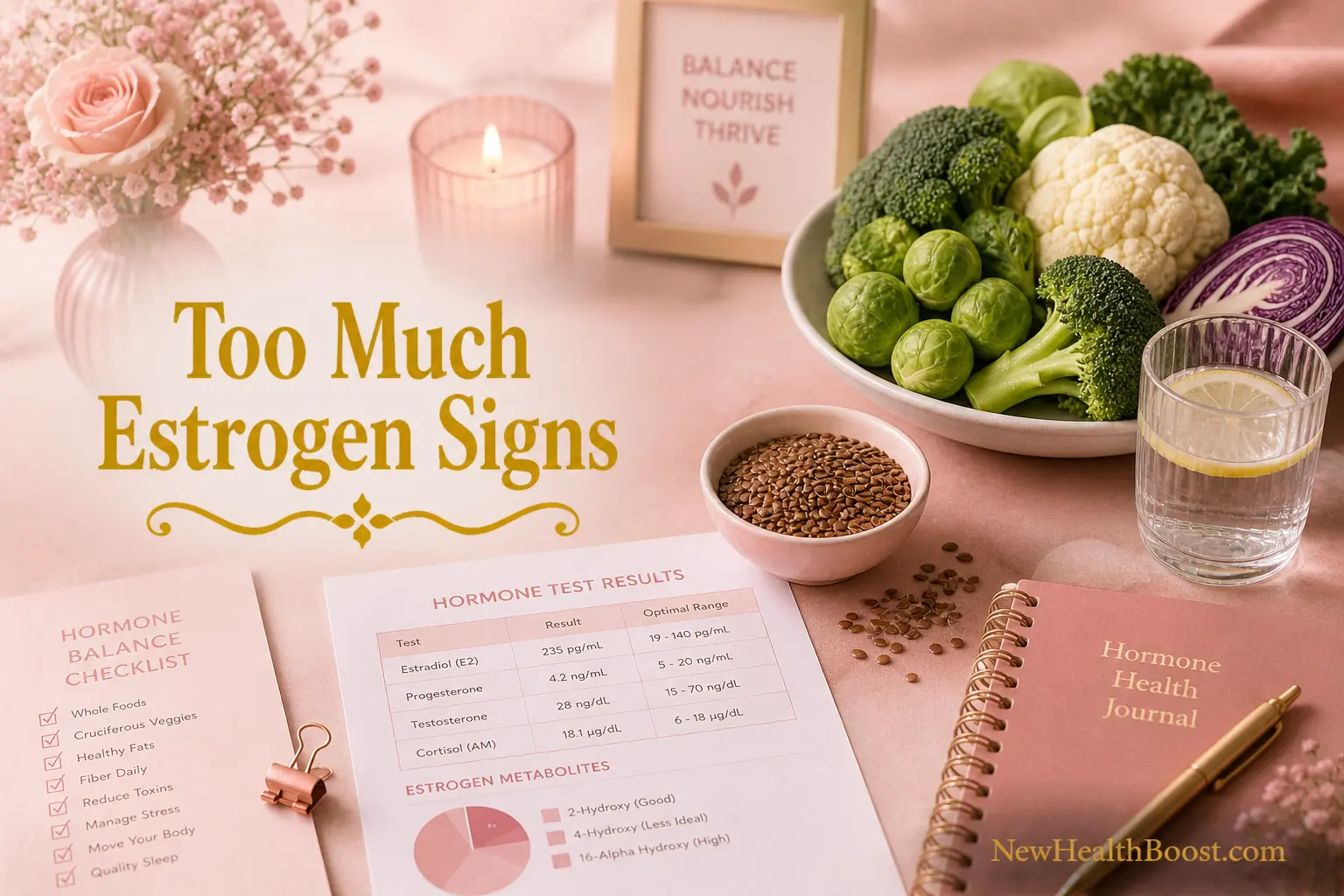
The signs of estrogen dominance affect far more women than most realize — yet the condition is rarely diagnosed until symptoms become severe. Estrogen dominance does not necessarily mean your estrogen is extremely high in absolute terms. It means estrogen is high relative to progesterone — a ratio problem that is increasingly common in modern women due to chronic stress, poor diet, gut dysbiosis, and daily exposure to synthetic estrogen-like chemicals. Understanding the specific signs helps you identify the pattern early and take targeted action before it progresses into more serious conditions like fibroids, endometriosis, or hormone-sensitive cancers.
This article is part of our women’s hormonal health series. For the complete framework on restoring hormonal balance — including the root causes of estrogen dominance and the evidence-based strategies that actually reverse it — our full guide to how to balance hormones naturally is your most important next read. And if you’re wondering whether your symptoms reflect the broader picture of hormonal imbalance that often develops in the 30s and 40s, our article on early signs of hormonal imbalance in women over 30 helps you place estrogen dominance within the full hormonal context.
What Is Estrogen Dominance?
Estrogen dominance is a state in which the effects of estrogen — both from internal production and from external sources — outweigh the balancing influence of progesterone. This can occur in several ways: estrogen levels may be genuinely elevated, progesterone may be insufficient (even with normal estrogen), estrogen clearance by the liver may be impaired, or the gut microbiome may be recycling cleared estrogen back into circulation. In many women, all four factors contribute simultaneously.
The condition is not a single, fixed hormonal reading — it is a dynamic pattern that worsens under stress, during the premenstrual phase, around perimenopause, and in the presence of xenoestrogens (synthetic hormone-disrupting chemicals from plastics, pesticides, and personal care products). Understanding this helps explain why symptoms often fluctuate and why addressing only one factor rarely produces lasting relief.
• Estrogen dominance is estimated to affect up to 50% of women over 35
• It is a primary driver of PMS in up to 70% of cases
• Uterine fibroids — strongly associated with estrogen dominance — affect 70% of women by age 50
• Endometriosis, another estrogen-driven condition, affects 1 in 10 women of reproductive age
• Xenoestrogen exposure from plastics and pesticides has increased measurably since the 1970s
The 10 Signs of Estrogen Dominance
Sign 1: Heavy, Painful, or Prolonged Periods
Estrogen stimulates the growth of the uterine lining (endometrium). Without adequate progesterone to regulate this growth in the luteal phase, the lining can become thicker than normal — leading to heavier bleeding, more prolonged periods, and increased menstrual cramping when it finally sheds. Passing clots larger than a 50p coin, soaking through a pad or tampon in under an hour, or periods lasting longer than 7 days are all hallmarks of an estrogen-dominant menstrual pattern. Over time, this pattern can lead to iron deficiency anemia from chronic blood loss.
Sign 2: Breast Tenderness and Swelling
Breast tissue is packed with estrogen receptors. When estrogen is relatively elevated — particularly in the 7–10 days before menstruation — breast tissue responds by becoming swollen, tender, and sometimes lumpy. This is one of the most consistent and specific signs of estrogen dominance, as breast tenderness in the luteal phase almost always reflects inadequate progesterone to counterbalance estrogen’s proliferative effects on breast tissue. Fibrocystic breast changes (benign cysts and thickening) develop from the same pattern and are more prevalent in estrogen-dominant women.
Sign 3: Bloating and Water Retention
Progesterone has a natural diuretic effect — it opposes aldosterone and helps the kidneys excrete excess sodium and water. When progesterone is low relative to estrogen, water retention increases. This produces cyclical bloating — often severe in the premenstrual week — and a persistent puffiness or heaviness in the abdomen, face, and extremities that many women attribute to digestive issues or simply “being bloated.” The bloating of estrogen dominance is hormonal, not primarily digestive, and will not fully resolve with dietary interventions alone until the underlying hormonal imbalance is addressed.
Sign 4: Mood Swings, Irritability, and Anxiety
Progesterone is a potent GABA agonist — it binds to the same brain receptors as anti-anxiety medications, producing a calming, mood-stabilizing effect. When progesterone falls short, GABA activity decreases and anxiety, irritability, and emotional volatility increase. Estrogen also influences serotonin — but when its levels become erratic or excessive, the net effect on mood can shift from positive to destabilizing. Women with estrogen dominance typically experience their worst mood symptoms in the 7–14 days before menstruation, improving noticeably when estrogen drops and progesterone briefly rises just before the period begins — or when the period starts entirely.
Sign 5: Weight Gain Around Hips, Thighs, and Abdomen
Estrogen receptors in adipose (fat) tissue promote fat storage — particularly in the hips, thighs, and lower abdomen. This is the pattern most characteristic of estrogen dominance: gaining fat in these areas despite no significant change in diet or exercise, and finding that standard fat-loss strategies are less effective than they used to be. The water retention component also contributes to apparent weight gain. Additionally, estrogen dominance frequently co-occurs with insulin resistance, which independently drives abdominal fat accumulation and makes weight loss significantly more difficult.
Sign 6: Headaches and Migraines Around Menstruation
Estrogen influences the tone of blood vessels and serotonin receptor sensitivity. The sharp drop in estrogen that occurs just before menstruation (or during perimenopause, when estrogen levels fluctuate erratically) is a well-established trigger for hormonal headaches and migraines. Women who experience migraines exclusively or predominantly around menstruation — typically in the 2 days before to 3 days after their period — are experiencing estrogen-withdrawal migraines, which are a direct consequence of the estrogen dominance pattern: high relative estrogen through the cycle, with a sharp premenstrual drop.
Sign 7: Fatigue and Poor Sleep Quality
Progesterone’s role in sleep is well established — it has sedative properties through its metabolite allopregnanolone, which enhances GABA receptor activity in the brain. When progesterone is low, sleep onset is harder, sleep is lighter and more easily disturbed, and women frequently report waking between 2–4am (a classic cortisol-related awakening time) without being able to fall back asleep. The resulting sleep deprivation further elevates cortisol, which further suppresses progesterone — reinforcing the estrogen dominant pattern.
Sign 8: Uterine Fibroids or Endometriosis
Both uterine fibroids (benign muscle tumors of the uterine wall) and endometriosis (endometrial tissue growing outside the uterus) are estrogen-driven conditions. They develop and grow in response to estrogen stimulation and regress when estrogen falls — as happens naturally in menopause. Their presence is a significant clinical sign of chronic estrogen dominance, not merely a structural abnormality. Women with diagnosed fibroids or endometriosis who are not actively addressing their hormonal environment are likely to see their conditions progress or recur even after medical treatment.
Sign 9: Brain Fog and Poor Concentration
While estrogen generally supports cognitive function, erratic or excessive estrogen — particularly when unbalanced by progesterone — can impair the clarity and consistency of cognitive performance. Women with estrogen dominance often describe a particular type of brain fog that is most prominent in the premenstrual phase: difficulty thinking clearly, poor word retrieval, reduced short-term memory, and a general sense of mental sluggishness. Progesterone, when properly balanced, supports GABA-mediated calm that actually enhances focused thinking — its absence allows neural excitability to interfere with concentration.
Sign 10: Low Libido and Vaginal Dryness
This sign is counterintuitive — many women assume that high estrogen would improve libido. But libido in women depends most directly on testosterone, which is often suppressed in estrogen-dominant states. Elevated estrogen increases SHBG (sex hormone binding globulin), a protein that binds and inactivates testosterone — leaving less free testosterone available for libido, motivation, and arousal. Paradoxically, some women with estrogen dominance also experience reduced vaginal lubrication, as the estrogen-progesterone ratio matters more than absolute estrogen for optimal vaginal tissue response.
Estrogen Dominance vs. Low Estrogen: Key Differences
| Feature | Estrogen Dominance | Low Estrogen (Menopause/Perimenopause) |
|---|---|---|
| Periods | Heavy, prolonged, crampy | Light, infrequent, or absent |
| Breast symptoms | Tender, swollen, fibrocystic | Reduced fullness, atrophy |
| Weight pattern | Hips, thighs, lower abdomen | Shifting to abdominal (visceral) |
| Mood | Anxious, irritable, emotionally reactive | Flat, depressed, unmotivated |
| Sleep | Difficulty staying asleep, waking 2–4am | Night sweats, difficulty falling asleep |
| Skin | Acne, oiliness possible | Dry, thinning, loss of elasticity |
| Vaginal symptoms | Variable lubrication | Dryness, atrophy, discomfort |
| Hot flashes | Rare | Common and often severe |
What Causes Estrogen Dominance?
| Cause | Mechanism | How Common |
|---|---|---|
| Chronic stress / high cortisol | Steals progesterone precursor (pregnenolone steal); suppresses ovulation | Very common |
| Anovulatory cycles | No ovulation = no progesterone production in luteal phase | Common (PCOS, perimenopause, undereating) |
| Gut dysbiosis (low estrobolome) | Cleared estrogen reabsorbed rather than excreted | Common |
| Impaired liver clearance | Estrogen metabolites not adequately processed for excretion | Common (alcohol, medications, poor diet) |
| Xenoestrogen exposure | BPA, phthalates, parabens, pesticides occupy estrogen receptors | Universal in modern life |
| Excess body fat | Adipose tissue converts androgens to estrogens (aromatization) | Common |
| Insulin resistance | Reduces SHBG; increases aromatization; disrupts estrogen-progesterone ratio | Very common |
| Perimenopause | Progesterone declines faster than estrogen in early perimenopause | Universal (affects all women eventually) |
How to Address Estrogen Dominance Naturally
The most effective approach targets the root causes rather than simply suppressing estrogen. Supporting progesterone production, improving liver estrogen clearance, healing the gut estrobolome, and reducing xenoestrogen exposure work together to shift the estrogen-progesterone ratio toward balance.
Key dietary strategies include: eating 25–35g of fiber daily (particularly from cruciferous vegetables and ground flaxseed) to support estrogen excretion; reducing alcohol consumption (which impairs liver estrogen metabolism significantly); ensuring adequate protein for liver detoxification enzymes; and incorporating fermented foods daily to support a healthy estrobolome. Supplements with the strongest evidence for estrogen dominance include DIM (diindolylmethane, 100–200 mg daily), calcium D-glucarate (500–1,000 mg daily), and magnesium glycinate (which supports both progesterone production and liver function).
FAQ: Signs of Estrogen Dominance
Can estrogen dominance cause weight gain even if I eat well?
Yes — and this is one of the most frustrating aspects of the condition. Estrogen dominance promotes fat storage in the hips, thighs, and lower abdomen through receptor-mediated mechanisms that operate largely independently of caloric balance. Additionally, the water retention driven by low progesterone adds to apparent weight, and the insulin resistance that frequently accompanies estrogen dominance makes it genuinely harder to lose fat even with a caloric deficit. Women with estrogen dominance who focus exclusively on eating less and exercising more — without addressing the underlying hormonal pattern — often find their efforts yield diminishing returns. Hormonal rebalancing needs to precede or accompany any fat-loss strategy for it to be effective.
Is estrogen dominance the same thing as having too much estrogen?
Not exactly. Estrogen dominance is a ratio concept: it describes the state in which estrogen’s effects are insufficiently balanced by progesterone — regardless of whether absolute estrogen levels are objectively elevated. Many women with estrogen dominance have estrogen levels within the normal laboratory range, but their progesterone is so low that estrogen goes largely unopposed. Conversely, some women with elevated absolute estrogen levels are not estrogen dominant because their progesterone is also appropriately elevated. This is why testing estrogen alone is insufficient — the estrogen-to-progesterone ratio and the specific form and metabolites of estrogen matter as much as the absolute level.
Can men experience estrogen dominance?
Yes — though it manifests differently. In men, estrogen dominance typically produces gynecomastia (breast tissue development), reduced libido, erectile dysfunction, fatigue, and emotional changes. It is driven by the same root causes as in women: excess body fat (which aromatizes testosterone to estrogen), alcohol consumption, xenoestrogen exposure, and poor liver clearance. While this article focuses on women, the underlying mechanisms are shared, and the dietary and lifestyle strategies for correction are similar.
How do I know if my symptoms are estrogen dominance rather than another hormonal condition?
The pattern is distinctive but overlaps with other conditions, which is why testing is important. Estrogen dominance characteristically produces symptoms that worsen in the second half of the cycle (luteal phase) and improve with menstruation or shortly after. The combination of heavy periods, premenstrual breast tenderness, cyclical bloating, and mood swings in the week before the period — occurring in a woman whose cycles are still regular — is a high-confidence clinical pattern for estrogen dominance. Thyroid dysfunction, PCOS, and adrenal issues can produce overlapping symptoms but with different cyclical patterns and test results. For the complete framework for identifying and addressing the full spectrum of hormonal imbalance, our guide to how to balance hormones naturally is the definitive starting point. If your symptoms have been emerging gradually in your 30s, our article on early signs of hormonal imbalance in women over 30 provides important context. And if you also have irregular cycles or androgenic symptoms, our guide to PCOS symptoms, causes, and natural treatment explains how estrogen dominance and androgen excess can co-exist in the same woman.

⚠️ Disclaimer: This article is for informational and educational purposes only. It is not intended as medical advice. Always consult your healthcare provider regarding any health concerns, hormonal symptoms, or before beginning any new supplement or health protocol.