
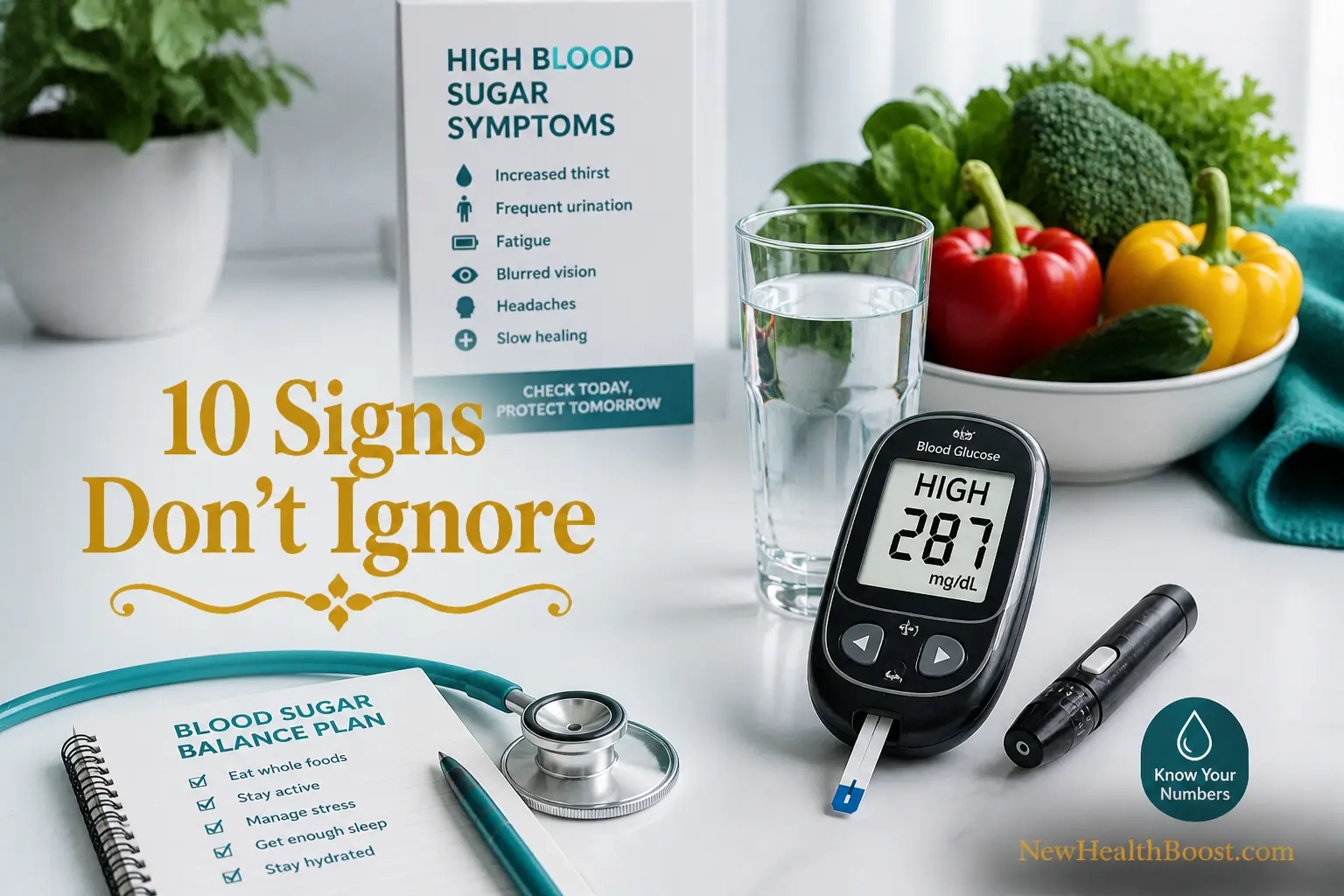
The most dangerous thing about elevated blood sugar is how unremarkable it feels at first. The signs blood sugar is too high are easy to dismiss as tiredness, stress, or getting older. But chronically elevated glucose quietly damages blood vessels and nerves for years before producing obvious symptoms — by which time significant harm may already be done. Recognizing the warning signs early, when intervention is simplest and most effective, is what separates prevention from treatment.
This article covers the symptoms of elevated blood glucose. Understanding the full context — why blood sugar rises, how to prevent it from progressing, and what to do — is covered in our complete guide on how to prevent type 2 diabetes. If you are also wondering whether insulin resistance may already be developing, our article on early signs of insulin resistance covers the precursor signs that appear years before diabetes develops.
Why Blood Sugar Rises — and Why It Matters
Blood glucose rises after eating as carbohydrates are broken down into glucose and absorbed into the bloodstream. In a healthy metabolic state, insulin is released by the pancreas to direct this glucose into cells, and blood sugar returns to baseline within 1 to 2 hours. In insulin resistance or prediabetes, cells no longer respond efficiently to insulin, glucose remains elevated longer, and the pancreas is forced to produce increasing amounts of insulin to compensate.
Chronically elevated blood glucose is damaging primarily because glucose chemically modifies proteins through a process called glycation, stiffening blood vessel walls, damaging nerve sheaths, clouding the lenses of the eyes, and impairing kidney filtration. These damages accumulate silently over years, which is precisely why early recognition of elevated blood sugar symptoms matters so much.
The 10 Warning Signs of High Blood Sugar
Sign 1: Excessive and Unexplained Thirst
Polydipsia — abnormal excessive thirst — is one of the classic and most reliable symptoms of elevated blood glucose. When blood sugar rises above the kidney’s reabsorption threshold (approximately 10 mmol/L or 180 mg/dL), glucose begins to spill into the urine and pulls water with it through osmosis. This produces increased urinary output (sign 2), which creates dehydration, which triggers intense, persistent thirst. If you find yourself drinking significantly more fluid than usual without increased exercise or heat exposure, elevated blood sugar is a strong possibility.
Sign 2: Frequent Urination, Including at Night
Polyuria — excessive urination — is the direct consequence of glucose spilling into the urine and taking water with it. Waking twice or more nightly to urinate (nocturia), needing to urinate very frequently during the day, or producing unusually large volumes of urine are all signs that the kidneys are excreting excess glucose. Many people attribute these symptoms to bladder issues or simply aging, delaying investigation significantly. If nocturia is new or worsening, blood glucose should be among the first things tested.
Sign 3: Fatigue That Is Disproportionate to Activity
Glucose is your cells’ primary fuel. In insulin resistance, glucose circulates in the blood but cannot efficiently enter cells — so your cells are effectively starving for energy despite plentiful glucose in the bloodstream. This produces a characteristic fatigue that is not relieved by adequate sleep, particularly pronounced after carbohydrate-rich meals, and often accompanied by a post-meal “crash” — a period of marked tiredness and brain fog 1 to 2 hours after eating. If your energy levels drop significantly after meals, your blood sugar response is worth investigating.
Sign 4: Blurred Vision
High blood glucose causes fluid shifts in the lens of the eye, changing its shape and temporarily altering its focal length. This produces blurred vision that fluctuates with blood glucose levels — often worse in the morning after overnight elevation or after a high-carbohydrate meal. In the longer term, chronically elevated glucose damages the small blood vessels supplying the retina (diabetic retinopathy), potentially causing permanent vision impairment. Sudden or fluctuating blurred vision that is not explained by existing prescription changes warrants blood glucose testing promptly.
Sign 5: Slow-Healing Wounds and Infections
Elevated blood glucose impairs wound healing through several mechanisms: it reduces the effectiveness of immune cells, impairs blood flow to peripheral tissues (particularly in the feet and legs), damages small blood vessels, and promotes bacterial and fungal growth by providing a rich glucose-containing environment. Cuts, scrapes, and sores that take unusually long to heal — particularly on the feet, legs, or hands — and recurrent infections (urinary tract infections, skin infections, thrush/yeast infections) are characteristic warning signs of chronically elevated blood sugar.
Sign 6: Tingling, Numbness, or Burning in Hands and Feet
Peripheral neuropathy — nerve damage caused by prolonged exposure to elevated glucose — begins in the longest nerves in the body, which reach the feet and hands. The earliest symptoms are often tingling, numbness, pins and needles, or a burning sensation in the feet or hands. These symptoms are typically symmetric (affecting both sides equally), often worse at night, and may initially be intermittent before becoming more persistent. Peripheral neuropathy is one of the most common complications of type 2 diabetes and often begins years before formal diagnosis.
Sign 7: Unexplained Weight Loss
While many people associate diabetes with weight gain (which is characteristic of insulin resistance in the earlier stages), significantly elevated blood glucose can paradoxically cause weight loss. When cells cannot access glucose efficiently, the body begins breaking down muscle protein and fat for energy. Additionally, glucose lost through urine represents a genuine caloric loss. Unexplained weight loss of more than 5% of body weight over a few months without dietary change should always prompt medical investigation, including blood glucose testing.
Sign 8: Increased Hunger Despite Eating
Polyphagia — excessive hunger — occurs when cells are unable to efficiently absorb glucose and interpret the energy deficit as a signal to eat more. You may eat a substantial meal and feel hungry again within an hour. This is particularly pronounced after high-glycemic meals that spike blood glucose rapidly, triggering an exaggerated insulin response that overshoots and drops blood glucose below baseline — creating reactive hypoglycemia and intense hunger despite having recently eaten significant calories. If you notice persistent hunger that meals do not satisfactorily resolve, blood glucose regulation is a likely contributing factor.
Sign 9: Recurrent Headaches and Difficulty Concentrating
The brain is highly dependent on stable blood glucose for optimal function. Both hyperglycemia (high blood sugar) and the postprandial dips that follow blood sugar spikes produce headaches, difficulty concentrating, mental sluggishness, and irritability. Brain fog — a sense of cognitive slowness or difficulty thinking clearly — is a very common complaint in people with prediabetes and early type 2 diabetes. If you notice your mental clarity fluctuating significantly with meals, or if you experience headaches on a pattern that correlates with eating, blood sugar instability is a strong candidate explanation.
Sign 10: Dark, Velvety Skin Patches (Acanthosis Nigricans)
Acanthosis nigricans is a distinctive skin condition closely associated with insulin resistance and elevated blood sugar. It appears as dark, thick, velvety patches of skin, typically in skin folds — the neck, armpits, groin, and occasionally elbows and knuckles. The discoloration is caused by insulin stimulating skin cell proliferation. The appearance of acanthosis nigricans is a reliable visual indicator of insulin resistance and is worth investigating with blood glucose testing, particularly in anyone with associated risk factors.
Symptom Severity by Blood Glucose Level
| Fasting Blood Glucose | Classification | Typical Symptoms |
|---|---|---|
| Below 5.6 mmol/L (100 mg/dL) | Normal | None |
| 5.6–6.9 mmol/L (100–125) | Prediabetes | Usually none; fatigue, mild thirst possible |
| 7.0–10.0 mmol/L (126–180) | Early Diabetes | Fatigue, thirst, frequent urination, brain fog |
| 10.0–14.0 mmol/L (180–250) | Moderate Hyperglycemia | All above + blurred vision, headaches, slow healing |
| Above 14.0 mmol/L (250+) | Severe Hyperglycemia | All above + nausea, abdominal pain, require medical attention |
What to Do If You Recognize These Signs
If you recognize three or more of these symptoms — particularly in combination with known risk factors such as overweight, family history, or a sedentary lifestyle — the appropriate next step is a simple blood test. A fasting blood glucose test and HbA1c can be requested through your GP or obtained at a pharmacy or health clinic in many countries. These tests are inexpensive, rapid, and provide definitive information about your current glucose status.
Immediate Steps to Lower High Blood Sugar
While waiting for medical evaluation, several evidence-based actions can help reduce blood glucose levels relatively quickly. A 15 to 20 minute walk immediately after meals reduces postprandial blood glucose spikes by 20 to 30%. Drinking water (dehydration concentrates blood glucose). Reducing or eliminating refined carbohydrates and sugary drinks. And prioritizing sleep, as even one night of sleep deprivation meaningfully raises fasting blood glucose the following day. None of these replace medical assessment — but they are safe, immediate, and beneficial regardless of your test results.
FAQ: Signs Blood Sugar Is Too High
Can high blood sugar occur without diabetes?
Yes. Temporary hyperglycemia can occur in non-diabetic people after very large carbohydrate-rich meals, during acute illness or infection (stress hormones raise blood glucose), as a side effect of certain medications (particularly corticosteroids), and in people with prediabetes who have not yet reached the diagnostic threshold. Transient elevations are generally not harmful; it is chronic, sustained elevation that produces the organ damage associated with diabetes. A single high reading is less significant than a pattern of elevated readings, which is why HbA1c — reflecting the three-month average — is more diagnostically meaningful than a single fasting glucose.
Do I need a glucose meter to monitor my blood sugar?
For people without a diabetes diagnosis, routine home glucose monitoring is generally not recommended as a standalone strategy, and the readings require context to interpret correctly. A better starting point is a GP or clinic blood test (fasting glucose + HbA1c), which provides a medically validated baseline. If you are in the prediabetic range or have been told you are at risk, your doctor may recommend periodic home monitoring. Continuous glucose monitors (CGMs) are increasingly affordable and provide detailed insight into how specific foods and activities affect your individual glucose response, which can be highly motivating for lifestyle change.
How quickly can blood sugar be brought back to normal with lifestyle changes?
For people in the prediabetic range, meaningful improvements in fasting blood glucose are typically measurable within 2 to 4 weeks of reducing refined carbohydrates, increasing physical activity, and improving sleep. HbA1c — which reflects the preceding three months — takes 3 to 6 months to show significant improvement. Weight loss produces the most dramatic improvements: losing 5 to 7% of body weight reduces diabetes risk by 58% and can return prediabetic blood glucose levels to the normal range. Full normalization is most achievable the earlier intervention occurs — which is why recognizing these signs early and acting promptly is so important. Our complete guide on how to prevent type 2 diabetes covers the full intervention framework.

⚠️ Disclaimer: This article is for informational purposes only and does not constitute medical advice. Please consult a qualified healthcare professional for diagnosis, treatment, or management of any medical condition.